


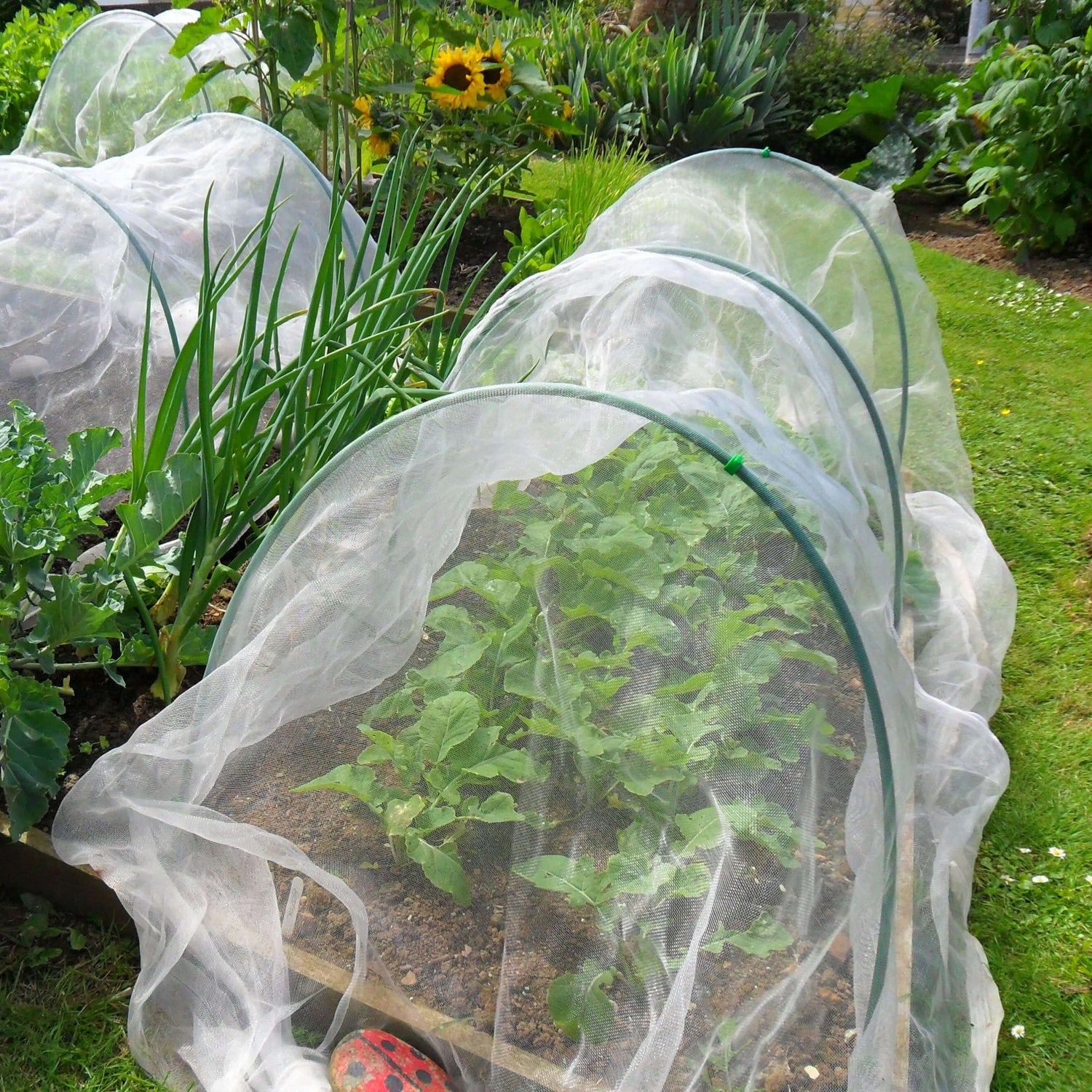


Veggiemesh Insect Netting for Vegetables
Veggiemesh Insect Netting for Vegetables - 1.8m (5ft 11in) / 1m (Buy per metre) is backordered and will ship as soon as it is back in stock.
Veggiemesh® garden netting protects your crops from insect pests without chemicals. This lightweight, garden mesh netting is a fine-mesh barrier stops insects from landing on or feeding on plants, while still allowing air, light, and rain through. Used by home gardeners and allotments across the UK.
Best for: brassicas, carrots, leeks, onions, peas, salads, seedlings
Garden Mesh Netting, Veggiemesh
Veggiemesh® can be laid directly over plants or used with garden hoops or garden cages for added structure. Its fine mesh keeps pests out while allowing crops to grow naturally beneath.
Veggiemesh® insect netting helps protect against many common garden pests, including:
- Cabbage root fly
- Carrot fly
- Cabbage white butterfly
- Pea moth
- Leek moth
- Cutworm
- Onion fly
- Many types of aphids
For smaller pests such as flea beetles, leaf miners, or whitefly, we recommend Veggiemesh® Ultrafine, which features a tighter weave for finer, more targeted protection.
Key Benefits:
- Chemical-free barrier protection
- Lets air, light, and rain through
- Lightweight and easy to handle
- Use over beds, hoops, or cages
- Helps protect against weather stress
More Than Pest Protection
In addition to pest protection, Veggiemesh helps protect crops from:
- Mild frosts
- Wind damage
- Heavy rain
- Hail
This added layer of protection helps promote healthy plant growth throughout the growing season.
Does Veggiemesh® Allow Pollination?
Veggiemesh® can remain in place from planting through to harvest. However, fruiting plants that rely on pollinators such as bees may need the mesh temporarily lifted during flowering to allow pollination.
If laying the mesh directly over plants, make sure to allow enough slack for growth. Once in place, secure the edges using netting pegs or clips, or bury the sides to prevent gaps that insects could enter through.
Top Tips / Common Mistakes
- Ensure all edges are fully sealed using clips, pegs, or by burying
- Leave enough slack for plant growth
- Lift the mesh during flowering on pollinated crops
Not sure which netting is right for your garden?
See our netting comparison guide or contact us for help choosing the best option for your crops.

Veggiemesh Insect Netting for Vegetables
Reviews
Reviews
Specifications
Specifications
Mesh size:1.35mm Light passage: 90% Air passage: 95%. Weight: approx. 55gms/sq. m Yarn Thickness: 0.24mm
How To Use
How To Use
Cover plants or seeds immediately after planting or sowing (ensure plants are free from insect pests) and leave covered until harvest. Always allow enough slack for the plants to grow, the edges can be buried or secured with pegs ensuring there are no gaps.
Watering/Feeding: Just water and feed through the netting.
Cutting: Veggiemesh® can be cut with scissors or a hot knife.
Care: Veggiemesh® can be washed on a "wool" cycle in the washing machine. It should last at least 10 years.
Note: Remove during flowering if crops depend on pollination by bees.
Things to cover: Cabbage, broccoli, cauliflower, sprouts, turnips, swedes, radish, carrot, parsnip, celery, spinach, parsley, onions, leeks, peas, lettuce and all types of oriental vegetables. Strawberries, raspberries and currants.
Veggiemesh will keep our the following pests: Carrot fly, cabbage white butterfly, pea moth, cutworm, leek moth, leaf miners and many species of aphids.
More Information
More Information
Veggiemesh FAQs
If I buy by the running metre how will it arrive?
Buying by the running metre allows you to purchase the exact length required. If you order 'by the metre' it will come in one length folded, not beautifully, but folded. It does work out cheaper to buy our veggiemesh pack sizes.
What are Aphids?
Aphids are small insects that feed off sap. Most aphids get their sap from vegetation, shoots, and flowers. However, some directly feed from the roots.
It is possible to see aphid colonies on plants and vegetables. If left unprotected by something such as Veggiemesh®, then aphids can stunt the growth of vegetables and other plants.
How to get rid of aphids?
It is possible to spray aphids off plants with water, but this is not a good option if the infestation has already taken hold, or your vegetables are very young.
This will likely result in the aphids coming back and may also be too late, as they probably will have already done the damage to your crop by the time you’ve seen them.
Far better to protect your vegetables with Veggiemesh® insect mesh, as this will provide a longer-term solution.
What is a cabbage white butterfly?
The cabbage white butterfly is a white butterfly with small black markings on their wings. The larger cabbage white butterfly will lay their eggs in batches on the leaves of brassica.
What do cabbage white butterflies eat?
While the adults will not do any damage do vegetables, like cabbages. The larvae of the cabbage white butterfly will feed and damage plants. If left unprotected the cabbage white butterfly can destroy entire brassica yields.
How to stop cabbage white butterflies?
Aside from removing the eggs by hand, which can be difficult to spot, the best way to prevent cabbage white butterflies from laying eggs on your cabbages is to protect them with Veggiemesh®.
Veggiemesh® insect netting will prevent the cabbage white butterfly from laying eggs on any of your brassicas, whilst still allowing air and sunlight to reach the crops.
