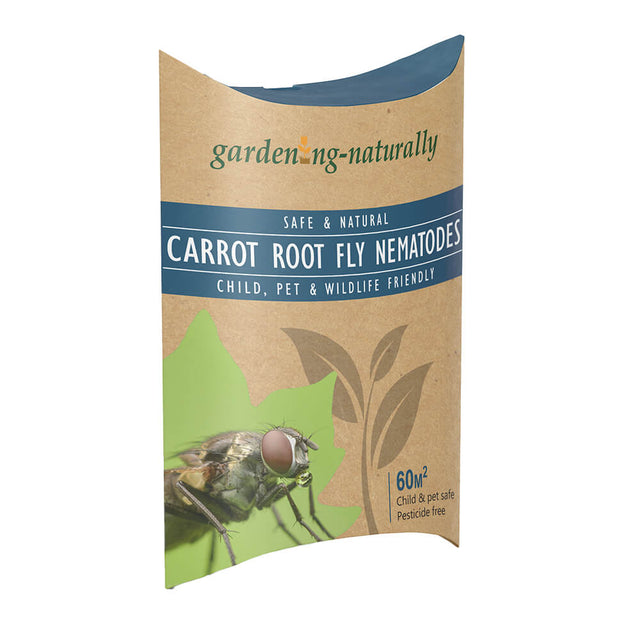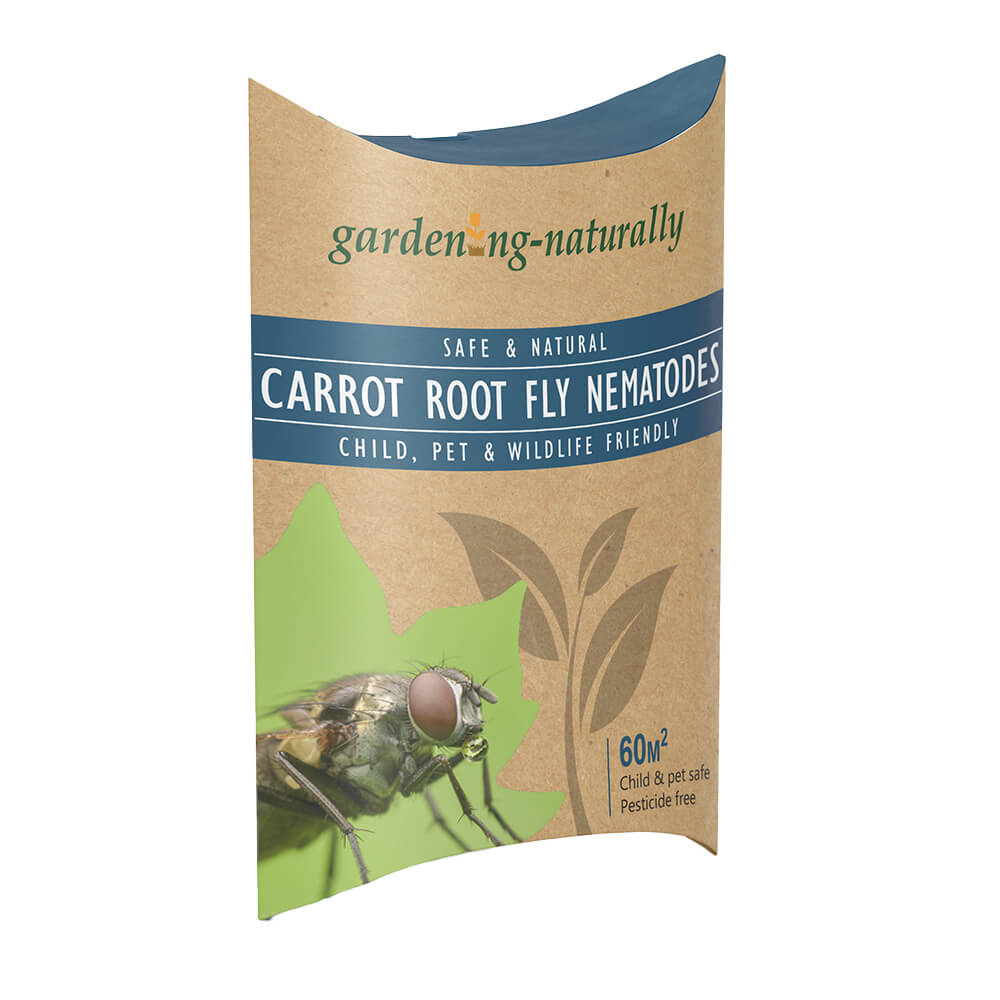


Carrot Root Fly Nematodes 60sq.m
Carrot Root Fly Nematodes 60sq.m is backordered and will ship as soon as it is back in stock.
Treat Root Fly in Carrots with Beneficial Nematodes
This soil-applied treatment helps reduce root damage caused by carrot fly larvae. One pack is suitable for up to 60 square metres of growing space.
Carrot Fly Lifecycle and Peak Risk Periods
Adult flies typically emerge between April and June, then again from late summer into autumn. After laying eggs near the base of plants, larvae hatch and start feeding on developing roots within a week.
Best Time to Apply the Carrot Root Fly Nematodes
Apply in spring to address the first wave, and again from late July to early October for the second. The microscopic organisms seek out and interrupt the larvae in the soil, helping to prevent ongoing issues.
Common Signs of Root Fly Damage
Larvae burrow into the roots of carrots, leaving reddish tunnels beneath the skin. You may also notice leaf wilting or a reddish hue in the foliage as symptoms develop.
How to Apply Nematodes to Soil
Mix the pack contents with water and apply using a watering can or applicator. If poured over foliage, rinse the plants within 30 minutes to ensure the product reaches the soil layer.
How to Store Before Use
Keep stored at a temperature below 5°C. Always use by the expiry date shown on the packaging for best results, expiry date is approximately 2 weeks.
Improve Your Results with Physical Barriers
For increased protection, pair with Veggiemesh netting to limit adult flies from reaching the crop. This combined approach helps reduce long-term risk.
Browse our applicator tools to make distribution simple and consistent.
Please note: This is a perishable product with an expiry date of approx 2 weeks. Store in the fridge until needed.
Carrot Root Fly Nematodes 60sq.m
Reviews
Reviews
How To Use
How To Use
Use the entire pack. Make a stock solution by emptying the whole packet into 6L of water and stir continuously. Once mixed, this solution needs to be used within 4 hours. Take 0.5L of the stock solution and pour it into a separate bucket, mixing with 4.5L of water while stirring continuously. Transfer the 5L solution from the bucket into a watering can. Apply to the soil surface around the plant stems. One watering can will treat approximately 5m2. Repeat this process until all the stock solution has been used, then water the treated area with the watering can or a hose pipe.